How pricing quietly nudges you to spend more.
The decoy effect: add a third, deliberately worse option and watch preferences shift: the classic three-tier pricing trick.
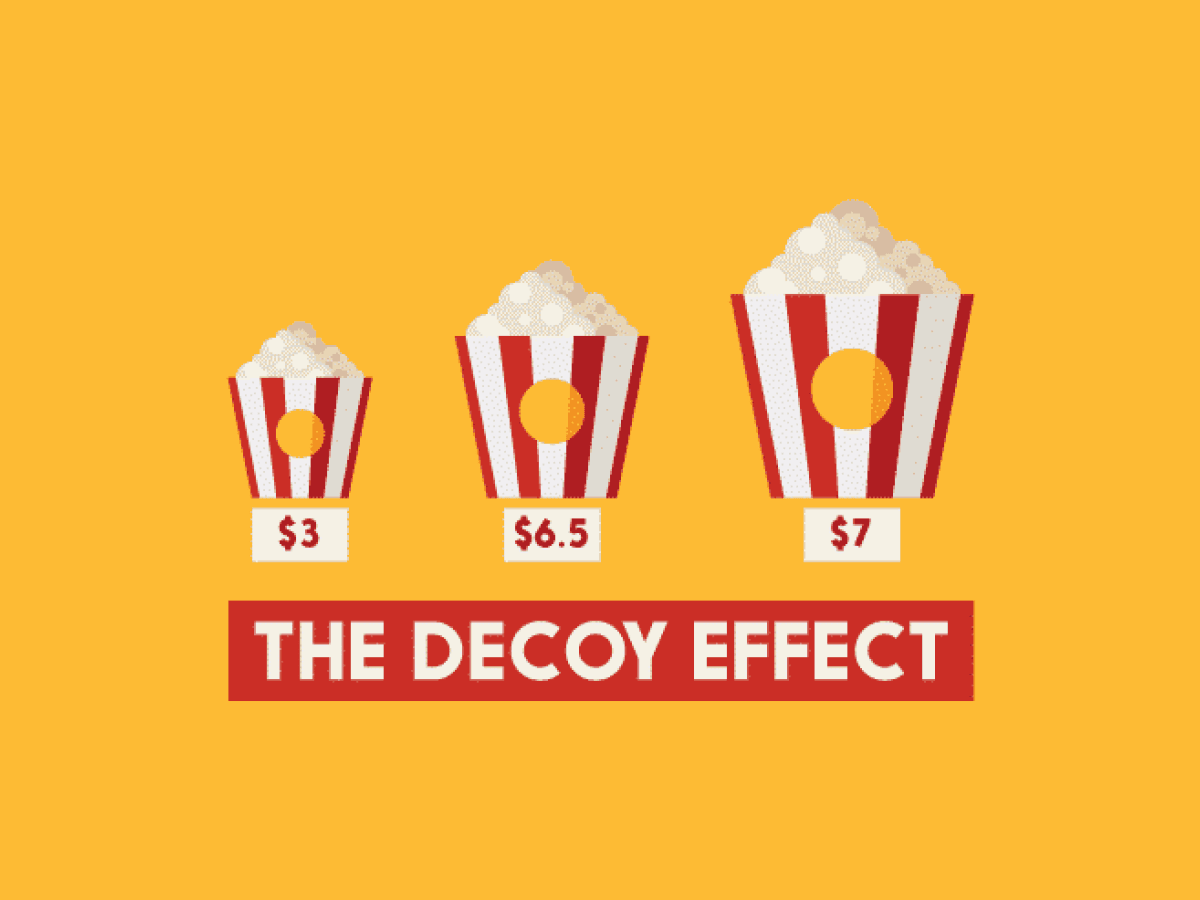
The decoy effect, also called asymmetric dominance, is a cognitive bias where your choice between two options changes the moment a third, less attractive option appears. It shows up constantly in pricing and menus.
Start with two options, A and B, that differ on price, size or features. Now introduce a decoy: deliberately designed to be clearly worse than one of them. Suddenly the option it resembles looks like the obvious win, and preferences swing toward it, even though nothing about the original two changed.
It's why so many products sell in three tiers: a basic plan, a premium plan, and a decoy priced near premium but with fewer features. The decoy makes premium feel like the smart buy. Understanding the effect helps businesses design honest choices, and helps customers spot when a comparison is being staged for them.